Saint / folklore
Sant'Antonio Abate
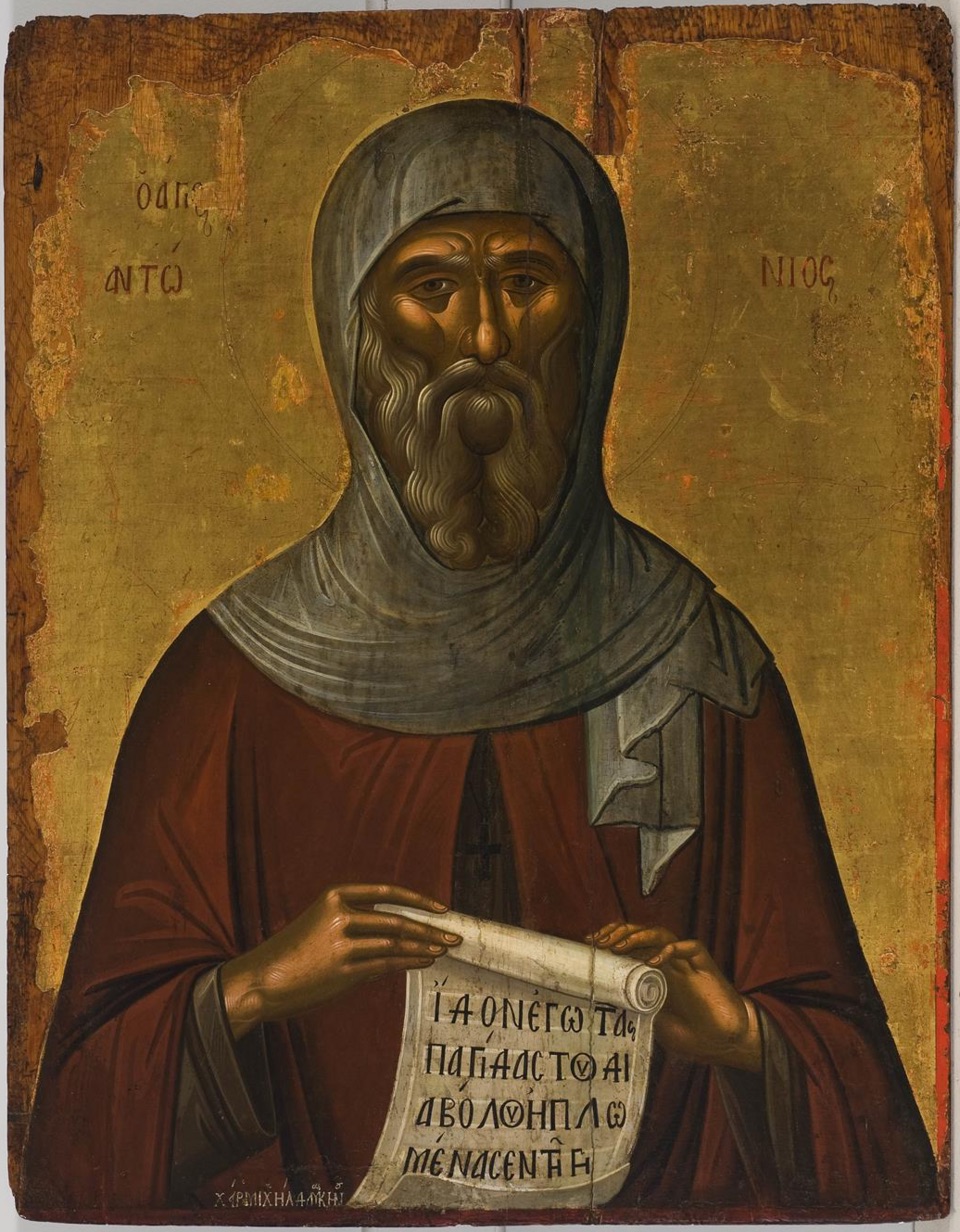
Background
Anthony the Great was a Christian monk from Egypt, revered since his death as a saint. He is distinguished from other saints named Anthony, such as Anthony of Padua, by various epithets: Anthony of Egypt, Anthony the Abbot, Anthony of the Desert, Anthony the Anchorite, Anthony the Hermit, and Anthony of Thebes. For his importance among the Desert Fathers and to all later Christian monasticism, he is also known as the Father of All Monks.
St Anthony the Abbot, the Egyptian hermit, has a very different face in Italian folk religion than in Church history. He is the patron of domestic animals and of fire. On his feast, 17 January, animals are brought to churches to be blessed, and bonfires are lit across the South. In Naples, people traditionally burned old furniture and junk in the streets in the cippo di Sant’Antonio, a ritual clearing-out at the end of the Christmas season.
His link with fire comes partly from “St Anthony’s fire”, the medieval name for ergotism. This was a burning disease caused by mouldy rye, which the Antonine monks specialised in treating. Partly it comes from legends of his descent into hell to steal fire for mankind. In his statues he holds a staff with a bell and a small flame, with a pig at his feet. As master of fire, he was a natural saint to call on against a volcano.
In Naples ’44
During the eruption he briefly displaces San Gennaro as the saint charged with holding back Vesuvius’s fire.
Appears in 1 diary entry.
-
March 24 1944With the eruption subsiding, Lewis meets Del Giudice, an eccentric folklore writer and expert on San Gennaro and Vesuvius.
briefly replaced San Gennaro as fire-saint
Use ← → to move between pages