Saint / folklore
Festival of the Lilies (Nola)
Background
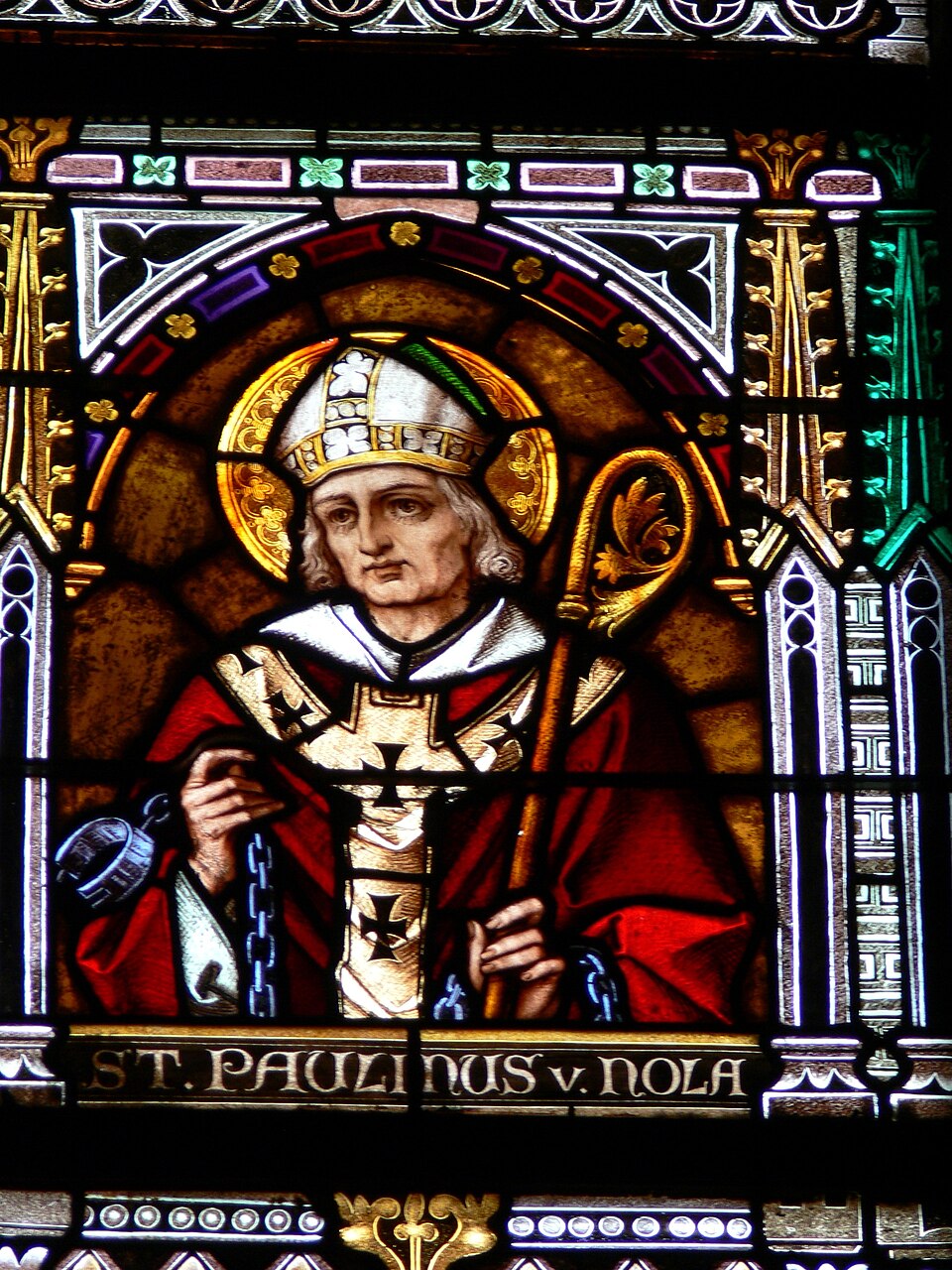
Paulinus of Nola born Pontius Meropius Anicius Paulinus, was a Roman poet, writer, senator, and bishop. He attained the ranks of suffect consul and governor of Campania, but, prompted by the counsels of his Hispanic wife Therasia of Nola and by the assassination of the emperor Gratian, abandoned his career and was baptized as a Christian. Later, probably after Therasia’s death, he became bishop of Nola in Campania.
The Festa dei Gigli honours St Paulinus, the fifth-century bishop of Nola. Legend has it that when he came home from captivity in Africa, the townspeople met him carrying lilies. Today the “lilies” are eight wooden obelisks about 25 metres tall, each sponsored by one of the town’s historic trades (gardener, baker, butcher, cobbler, blacksmith, tailor and others), plus a ship recalling Paulinus’s return by sea.
Each structure weighs several tonnes and is carried on the shoulders of a team of over a hundred men, the paranza. They make it sway and “dance” through the narrow streets to a live band on its base. The feast falls on the Sunday after 22 June. In 2013 UNESCO listed it, with similar processions elsewhere in Italy, as Intangible Cultural Heritage.
In Naples ’44
Nola’s Feast of St Paulinus, in which towering wooden ‘lily’ structures are carried through the streets; in 1944 the procession brought the town to a standstill and sliced through the army’s telephone cables by the hundred — Eric Williams’s despair.
Appears in 1 diary entry.
-
June 27 1944A colleague describes a revived, medieval-style flagellant procession at Guardia Sanframondi; two more feast stories follow — Nola's Feast of the Lily disrupting army telephone lines, and a trip to Amalfi for the thrice-yearly 'manna' relic of St Andrew.
Feast of St Paulinus; giant wooden 'lily' towers paraded through Nola, cutting army telephone cables in the process
Use ← → to move between pages